Digital Twins: The Factory You Can Break Without Breaking
The plant manager wanted to test a new production layout. Moving Machine A next to Machine C, reorienting the conveyor, relocating the quality station. It would either save 15 minutes per batch... or create a bottleneck that tanks throughput.
Physical trial cost: ₹8 lakhs (moving equipment, reconfiguring utilities, 1 week of disrupted production).
Digital trial cost: ₹0. Zero rupees. Because they tested it in their digital twin first.
The simulation showed the new layout would create a 22-minute bottleneck at the quality station during shift changes. They never moved a single machine.
Saved: ₹8 lakhs. Avoided: Weeks of chaos. That's the power of a digital twin—you can break things without breaking anything.
What Actually Is a Digital Twin?
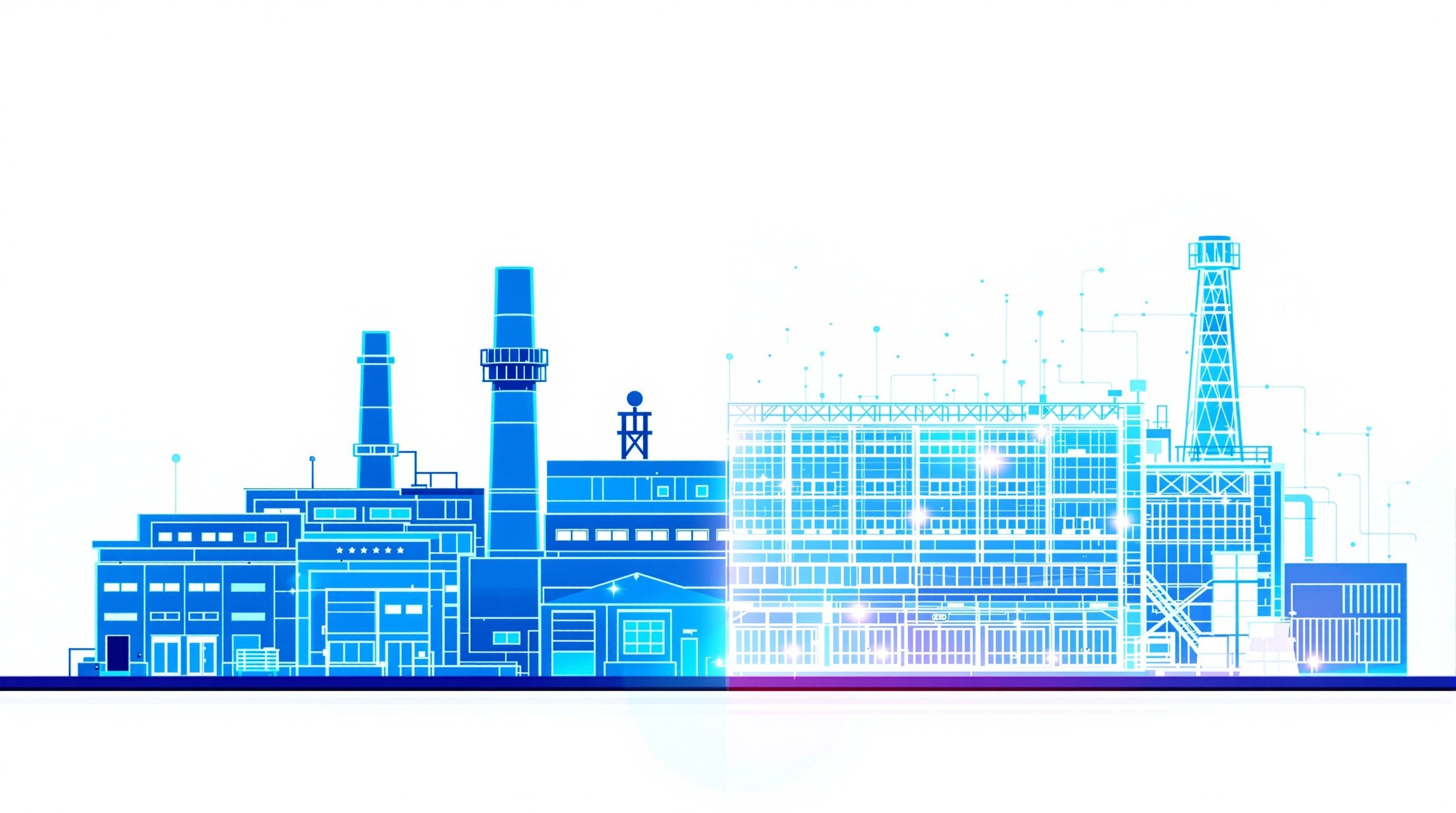
Strip away the buzzwords: A digital twin is a virtual replica of your physical factory that updates in real-time based on actual data.
Not a static 3D model. Not a simulation you run once. A living, breathing digital version that mirrors what's happening in your real factory, right now.
When Machine #3's temperature rises, the digital twin's Machine #3 temperature rises. When production shifts from Product A to Product B, the digital twin shifts. When a conveyor slows, the digital twin slows.
Then—and this is the valuable part—you can ask the digital twin "What if...?" without touching the real factory.
Real Use Cases (Not Sci-Fi Scenarios)
Use Case #1: Layout Optimization Without Chaos
An electronics manufacturer wanted to add a new production line. They had space, but where exactly should equipment go?
Traditional approach: Best guess based on experience, install it, deal with problems later.
Digital twin approach: They modeled 7 different layouts digitally. Ran simulations with actual production data (order mix, batch sizes, shift patterns).
Layout #3 looked great on paper but simulations showed operators would walk 40% more distance per shift. Layout #6 was slightly less optimal on paper but resulted in 12% higher actual throughput because material flow was smoother.
They built Layout #6. It performed within 3% of simulated predictions. First-time-right implementation.
Value: Avoided ₹15 lakhs in rework and lost production during trial-and-error.
Use Case #2: Maintenance Without Surprises
A chemical plant needed to shut down a reactor for annual maintenance. Historically, these shutdowns took 72 hours. Every hour cost ₹3.5 lakhs in lost production.
They built a digital twin of the reactor system. Before the actual shutdown, they practiced the entire maintenance sequence virtually—every valve closure, every system purge, every restart step.
The virtual practice revealed: Two valves would need to be closed in opposite order than planned, or pressure would build in a section that had no release. In the real factory, this would mean emergency shutdown extension. In the digital twin, it was just a lesson.
Actual shutdown after virtual practice: 61 hours. Saved: 11 hours = ₹38.5 lakhs.
They now run every major maintenance virtually before doing it physically.
Use Case #3: Production Optimization Without Guesswork
A food processing factory had a question: If we increase oven temperature by 5°C, will throughput increase enough to justify higher energy costs?
Testing this physically: 2 weeks of trial runs, inconsistent results because other variables (humidity, ingredient variations) weren't controlled.
Testing in digital twin: They ran 100 virtual days with the temperature increase, controlling for all other variables. Result: Throughput increased 7%, but product moisture content decreased below acceptable range in 23% of batches.
Conclusion: Temperature increase would create more problems than benefits. They never changed the physical oven setting. Saved weeks of disruptive testing and potential quality issues.
What It Actually Costs (And What You Get)
Let's be honest about investment:
Tier 1: Basic Digital Twin (Single Line/Process)
- Initial modeling and setup: ₹12-25 lakhs
- Sensor integration: ₹5-10 lakhs
- Software licensing: ₹3-6 lakhs/year
- Total Year 1: ₹20-41 lakhs
Tier 2: Comprehensive Factory Twin
- Full factory modeling: ₹40-80 lakhs
- Extensive sensor deployment: ₹15-30 lakhs
- Enterprise software: ₹10-20 lakhs/year
- Total Year 1: ₹65-130 lakhs
Sounds expensive. But compare to alternatives:
- One failed layout change: ₹8-15 lakhs
- One extended maintenance shutdown: ₹20-50 lakhs
- One wrong production parameter: ₹5-20 lakhs in quality issues
Avoid 2-3 of these per year, and the twin pays for itself.
When NOT to Build a Digital Twin
It's not for everyone. Skip it if:
1. Your Process is Simple and Stable
A factory makes one product, simple process, rarely changes anything. What would you simulate? There's nothing to optimize or test.
Digital twins add value when there's complexity to manage or changes to evaluate.
2. You Don't Have Data Infrastructure
Digital twins need real-time data feeds. If you don't have sensors, PLCs, or any data collection, building the data infrastructure costs more than the twin itself.
Get basic IoT and monitoring first. Then consider digital twins.
3. Cost of Mistakes is Low
If testing things physically is cheap and non-disruptive, just test physically. A small job shop that can reconfigure in 2 hours with minimal cost doesn't need expensive simulation.
Digital twins make sense when physical trials are expensive or risky.
The Practical Implementation Path
If you're serious about digital twins:
Phase 1: Start with One Critical Process (Months 1-3)
Don't model the entire factory. Pick your most problematic or most valuable process. A bottleneck line. Your highest-cost equipment. Your quality-critical step.
Build a twin of just that. Learn. Prove value.
Phase 2: Integrate Real Data Feeds (Months 4-6)
A static model isn't a twin. Connect it to real sensors and systems. Now it's not just simulation—it's a real-time mirror.
Phase 3: Run "What-If" Scenarios (Months 7-9)
Test production changes virtually before implementing physically. New shift pattern? Test it. New product mix? Simulate it. Equipment upgrade? Model it.
Phase 4: Expand to Connected Processes (Months 10-12)
Once one process twin is working, expand to upstream and downstream processes. Now you can simulate changes that ripple across multiple areas.
The Mindset Shift Required
Digital twins require thinking differently:
Old way: Plan change → Implement change → Deal with consequences
New way: Plan change → Simulate change → Refine based on simulation → Implement with confidence
This means slowing down up front to move faster later. Many managers struggle with this. "Why spend 2 weeks simulating when we could just DO it?"
Because "just doing it" wrong costs ₹20 lakhs and 3 months of disruption. 2 weeks of simulation costs ₹0.
Success Metrics That Matter
How do you know if your digital twin is working? Measure:
- Prediction accuracy: When simulation says X will happen, does X actually happen? Target: 90%+ accuracy
- Changes tested virtually vs. implemented blindly: You should be testing 80%+ of major changes virtually first
- First-time-right rate: Of changes implemented after virtual testing, how many work as expected? Target: 85%+
- Cost of avoided mistakes: Track near-misses—changes that simulation showed would fail
A automotive plant tracks this religiously. In 2 years, their digital twin:
- Tested 47 major changes virtually
- Prevented 12 changes that would have failed
- Optimized 31 changes before implementation
- Saved an estimated ₹1.8 crore in avoided failures and optimized outcomes
Their twin cost ₹65 lakhs Year 1. ROI: 277%.
The Bottom Line
Digital twins aren't about being futuristic. They're about being smart.
When physical testing is expensive, risky, or disruptive—test virtually first. When changes could go wrong in expensive ways—simulate first.
It's not about replacing physical factories with digital ones. It's about having a safe playground where you can try things, break things, learn things—before committing to real-world changes.
The best factories aren't the ones with the most advanced digital twins. They're the ones that learned which changes NOT to make—because their digital twin showed them the consequences before they happened.
Sometimes the most valuable feature of a digital twin is the word "Don't."
If this helped you see through the noise, share it with another factory owner, COO, or plant head wrestling with the same questions. Forward it on WhatsApp, post it on LinkedIn or X, or print it out for your Monday morning production meeting.
And if they haven't subscribed yet? Point them to thefactoryai.in. Two emails a week, zero fluff.